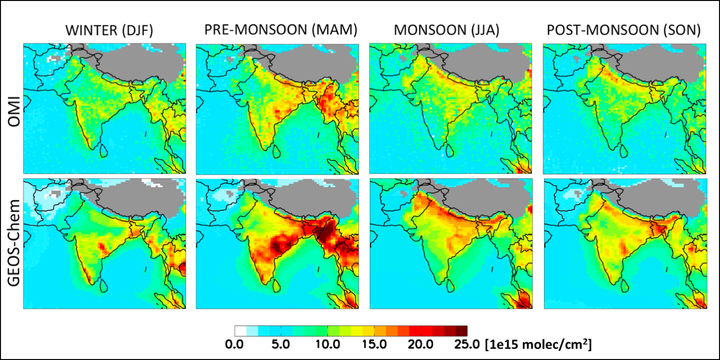
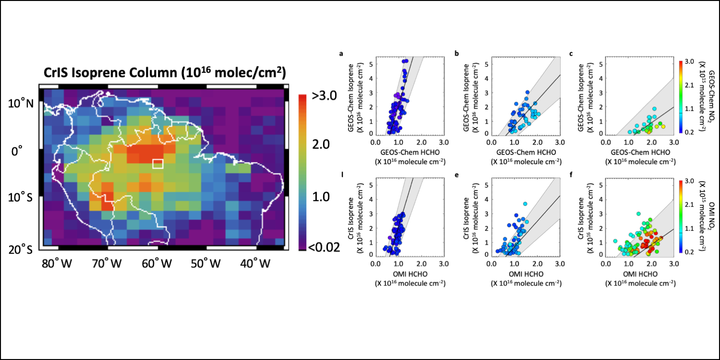
We use a combination of field measurements, global modeling, and satellite remote sensing to study the chemical composition of the atmosphere, how it's affected by human and natural processes, and the implications for climate and air quality.
Vacancies
Prospective graduate students and postdocs should contact dbm@umn.edu.
Current Research
Click on the topics below to find out more.
|
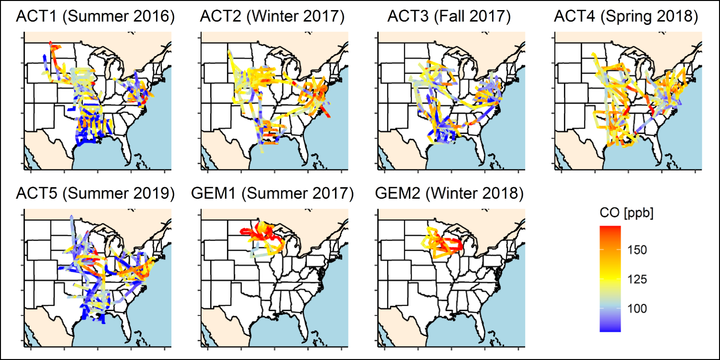
Tropospheric Composition
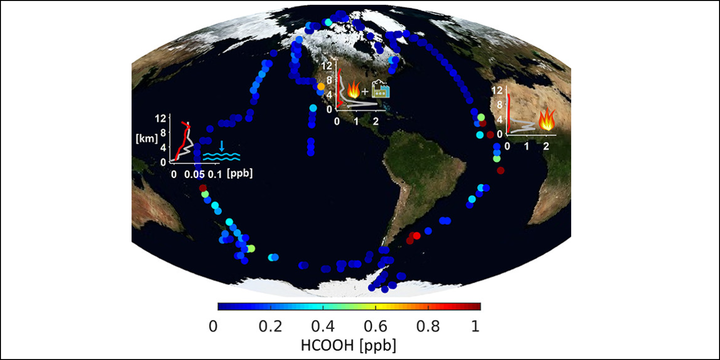
What controls the chemical composition of the polluted and remote atmosphere? In situ field measurements can provide the best quantitative constraints.
|
|
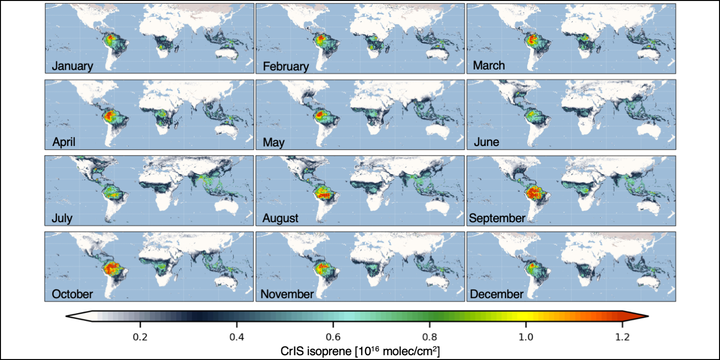
Cycling of Organic Carbon
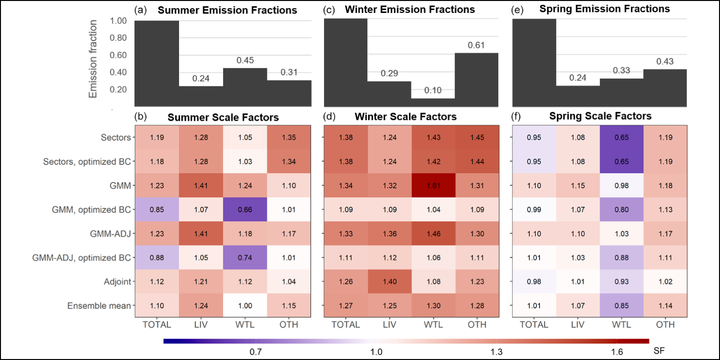
Organic chemistry drives many key atmospheric processes -- such as ozone and smog production, aerosol formation, the oxidizing capacity of the atmosphere, and radiative forcing.
|
|
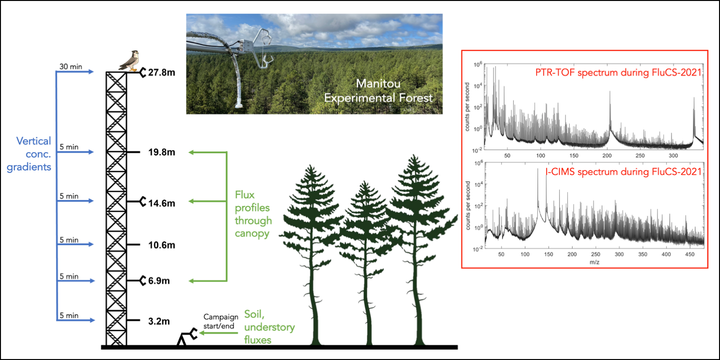
Biosphere-Atmosphere Exchange
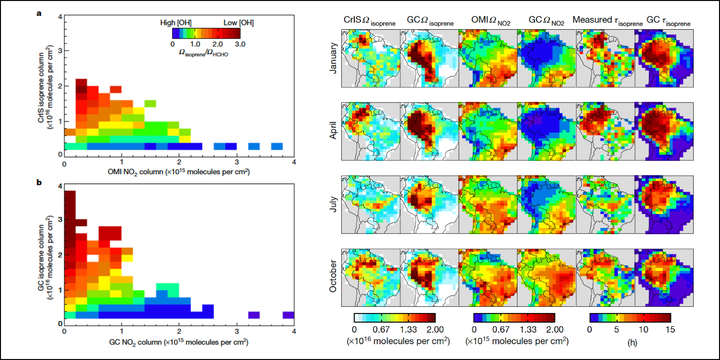
How does Earth's biosphere regulate the chemical properties of the atmosphere? The biosphere is a large but poorly understood source of reactive trace gases and particles to the global atmosphere.
|
|
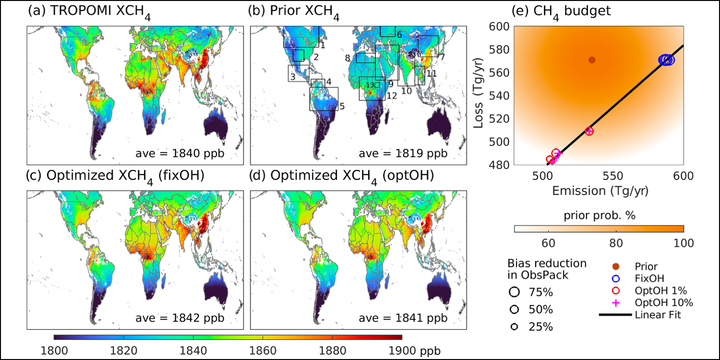
Emissions Mapping
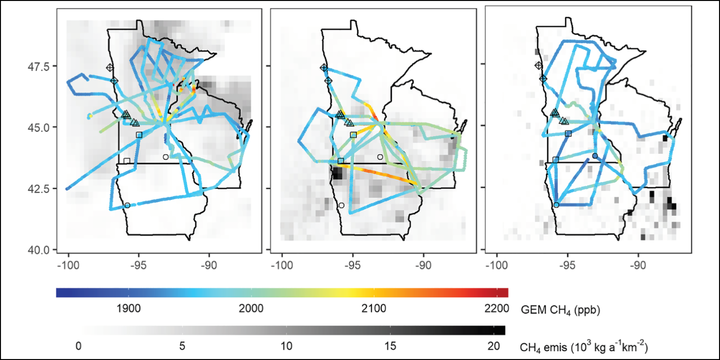
We use in situ (surface and aircraft) and remote (satellite) measurements to understand and quantify emission rates of key air quality and climate-relevant species.
|
|